Peptide research is increasingly being transformed by advances in analytical technology. Scientists are developing new methods that can identify peptide sequences more quickly, investigate previously unknown molecules, and generate more detailed information from complex biological samples.
Single-Molecule Peptide Sequencing
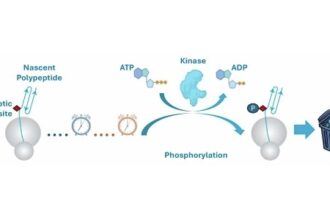
One notable development in 2026 is a technique for single-molecule peptide sequencing. Researchers reported a method that converts information from individual peptide molecules into DNA-based signals that can then be read using high-throughput sequencing. The approach achieved single-amino-acid resolution and was demonstrated with both native and modified peptides.
This type of technology could eventually provide researchers with a different way to investigate peptide and protein sequences, particularly when working with complex samples.
AI-Assisted Peptide Identification
Artificial intelligence is also becoming increasingly important in proteomics. New computational systems can analyze mass-spectrometry data and help researchers identify peptide sequences without relying entirely on existing protein databases.
For example, a 2026 study introduced a deep-learning approach capable of de novo peptide sequencing and open discovery of previously unanticipated post-translational modifications. Researchers demonstrated the method using biological and clinical samples.
High-Throughput Peptide Profiling
Another research direction involves combining peptide sensing with AI-based analysis. Researchers have developed nanopore-based systems designed to analyze large numbers of individual molecular events and generate peptide fingerprints that can help distinguish different peptides and identify proteins.
The ability to process large datasets efficiently is particularly important as modern proteomics experiments generate increasingly complex information.
Discovering Previously Unknown Peptides
Improved analytical techniques are also helping scientists investigate parts of the human proteome that were previously difficult to characterize. A 2026 Nature study analyzed extensive proteomics data and identified evidence for peptides and microproteins originating from previously under-characterized genomic regions.
This suggests that the known peptide landscape may continue to expand as researchers improve their ability to detect and validate small molecular products.
The Role of AI in Future Research
AI is increasingly being integrated into peptide identification, quantification, structural analysis, and proteomics workflows. A recent Nature Methods perspective describes AI applications ranging from peptide identification to the integration of large-scale proteomics datasets.
The important point is that computational predictions still need appropriate experimental validation. A computer-generated prediction or detection does not by itself establish biological function or clinical significance.
Looking Ahead
The combination of single-molecule technologies, mass spectrometry, nanopore sensing, deep learning, and computational modeling is giving researchers new ways to study peptides at increasingly fine levels of detail.
As these technologies mature, scientists may be able to characterize more peptide molecules, identify previously overlooked biological signals, and better understand how peptides participate in complex biological systems.
This article is intended for scientific and educational information and is not medical advice.