Peptide research is becoming increasingly interdisciplinary, combining chemistry, molecular biology, structural science and computational methods. Recent work shows that researchers are developing new ways to discover peptide molecules, understand their structures and investigate how they interact with biological targets.
Computational Design and AI
One of the major developments is the use of computational methods in peptide discovery. Researchers can analyze large peptide libraries, model molecular structures and use machine-learning approaches to investigate relationships between peptide sequences and biological interactions.
A 2026 review describes how computational mining, structural modelling, molecular simulations and AI-assisted screening are increasingly being integrated with experimental research.
Advances in Peptide Chemistry
Peptide chemistry is also evolving. Researchers are investigating new synthesis and modification techniques that can make peptide production more controllable and potentially more sustainable.
For example, recent research has examined electrochemical approaches to peptide synthesis and modification. These methods are being studied as alternatives or complements to established chemical techniques.
Understanding Peptide Assembly
Another active research area is peptide self-assembly. Some peptide molecules can organize into larger structures under particular conditions. Scientists are investigating how molecular sequences and environmental signals influence these assemblies.
Recent research has focused on stimulus-responsive and energy-driven peptide assemblies, with the broader goal of understanding how peptide-based materials can be designed to respond dynamically to their surroundings.
Improving Peptide Identification
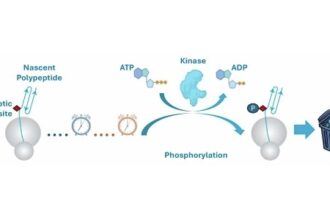
Advanced analytical technology is also changing peptide research. In 2026, researchers reported a deep-learning approach for de novo peptide sequencing that can analyze mass-spectrometry data and identify previously unanticipated post-translational modifications.
Better identification methods can help researchers characterize complex biological samples and understand peptide modifications that may otherwise be difficult to detect.
What This Means for Peptide Research
The overall direction of the field is toward combining experimental science with computational modelling and advanced analytical techniques. Rather than relying on one method, researchers increasingly use multiple approaches to investigate peptide structure, interactions and biological behavior.
These advances are promising for scientific research, but individual laboratory findings should not automatically be interpreted as evidence of safety or effectiveness for medical use. Appropriate clinical and scientific evidence is required before such conclusions can be made.
Nature’s current peptide research collection also shows activity across peptide synthesis, structural biology, biomaterials and molecular research, demonstrating how broad the field has become in 2026.