Peptide science is developing rapidly as researchers combine traditional laboratory techniques with computational modeling, artificial intelligence, and advanced analytical methods. Recent research shows that the field is moving toward more precise ways of discovering, characterizing, and designing peptide molecules.
Artificial Intelligence in Peptide Research
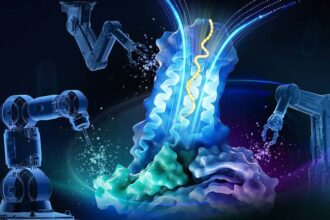
One of the notable developments is the increasing use of computational and AI-assisted approaches. Researchers are using machine-learning methods to examine peptide sequences, predict molecular interactions, and support the discovery of potential peptide candidates.
Recent work on peptide–GPCR research describes computational approaches including molecular modeling, peptide libraries, machine-learning-assisted screening, and structural analysis. These methods are increasingly being combined with experimental validation rather than replacing laboratory research.
Advances in Peptide Chemistry
Peptide chemistry is also expanding beyond traditional approaches. Researchers are developing new chemical strategies that allow peptide structures to be modified with greater precision.
A 2026 review highlights advances in electrochemical peptide synthesis and modification, describing how electrochemical techniques can provide new ways to modify peptide molecules under controlled conditions.
Exploring Peptide Self-Assembly
Another interesting research direction involves self-assembling peptides. Scientists are investigating how peptide sequences can organize into larger molecular structures and how these assemblies respond to different environmental signals.
Recent research has examined stimulus-responsive and energy-driven peptide assemblies, with potential relevance to the development of advanced biomaterials.
Better Peptide Identification
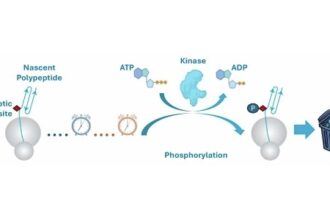
Analytical technology is also improving. In 2026, researchers reported a deep-learning-based approach for de novo peptide sequencing that can identify peptide sequences directly from mass-spectrometry data while also detecting previously unanticipated post-translational modifications.
Such technologies could make peptide characterization faster and more informative, particularly when researchers are studying complex biological samples.
What Comes Next?
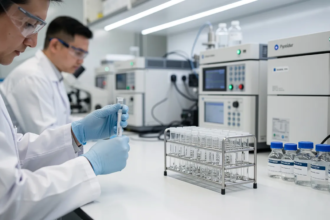
The direction of peptide research increasingly involves combining chemistry, biology, computational science, and advanced analytics. Instead of relying on one technique, researchers are building integrated workflows that connect molecular design with experimental testing and structural analysis.
These developments do not mean that every newly studied peptide has established medical benefits. Research findings need to be evaluated according to the quality of the underlying evidence, and laboratory or computational results do not automatically establish safety or effectiveness in humans.
Overall, 2026 research suggests that peptide science is becoming more computational, more precise, and increasingly interdisciplinary.