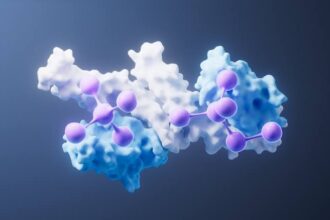
Peptides are small biological molecules composed of amino acids connected by peptide bonds. Although they are smaller than many proteins, peptides can have highly specific biological roles, making them an important subject of study in modern molecular and biochemical research.
From Amino-Acid Sequence to Structure
One of the fundamental questions in peptide science is how an amino-acid sequence determines a molecule’s three-dimensional structure. Researchers examine how different sequences influence folding, stability, chemical properties, and interactions with other molecules.
Even small changes in a peptide sequence can alter its physical and biological characteristics. For this reason, researchers carefully characterize peptide molecules using analytical and biochemical techniques.
Studying Peptide Interactions
Another important area is understanding how peptides interact with biological targets. Researchers may investigate interactions between peptides and proteins, receptors, membranes, or other cellular components.
These studies can provide information about molecular recognition and biological signaling. Experimental results are generally evaluated alongside additional laboratory evidence rather than being interpreted from a single experiment.
Peptide Stability
Stability is also an important subject in peptide science. Researchers investigate how environmental conditions and molecular structure influence peptide behavior over time.
Factors such as temperature, chemical environment, molecular composition, and structural characteristics can be relevant when studying peptide stability. Understanding these properties helps scientists design better experiments and interpret laboratory results more accurately.
New Research Technologies
Advances in analytical chemistry and computational biology are changing how peptides are studied. Modern researchers can combine experimental measurements with computational modeling to investigate molecular structures and interactions.
These approaches can make it possible to examine complex peptide systems in greater detail and generate new research questions.
Why Peptide Science Matters
Peptide science connects several fields, including biochemistry, molecular biology, chemistry, biotechnology, and pharmaceutical research. By studying how peptides are structured and how they behave in biological environments, scientists can improve their understanding of important molecular processes.
Research in this field continues to develop as scientists gain access to better analytical tools and increasingly sophisticated computational methods.
Research note: Findings from laboratory or computational studies should not automatically be interpreted as evidence of safety or effectiveness for a particular medical application. Such conclusions require appropriate scientific and clinical evidence.