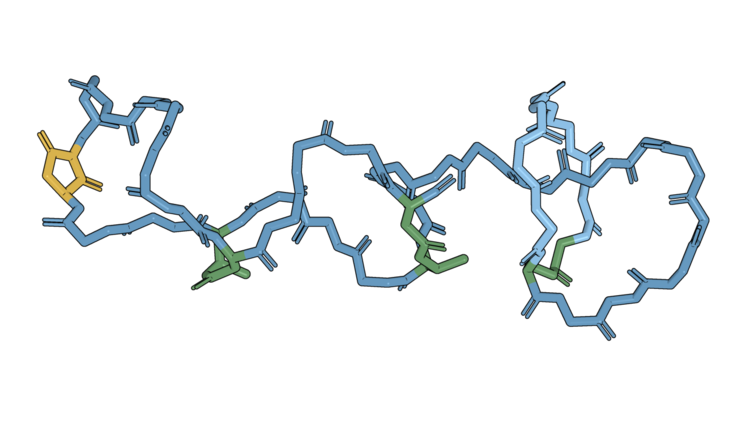
Researchers are exploring new ways to design peptides that interact with biomolecular condensates, dynamic structures that help organize biochemical processes inside cells. A 2026 study published in Nature Communications introduced a computational workflow for designing peptides that preferentially localize at the interfaces of these condensates.
What Are Biomolecular Condensates?
Biomolecular condensates are concentrated assemblies of proteins and other biological molecules that can form without being surrounded by a traditional membrane. They are involved in organizing biochemical reactions and cellular processes.
The boundaries between the dense and surrounding phases can have distinct molecular properties. Researchers are therefore interested in understanding what determines whether a molecule remains outside a condensate, enters its interior, or accumulates at its interface.
A Computational Approach to Peptide Design
The 2026 study developed a computational pipeline combining coarse-grained simulations, machine learning, and mathematical optimization. The researchers used these methods to explore peptide sequences that could preferentially localize at the interfaces of selected condensates.
The computational predictions were followed by experimental work. The researchers synthesized selected peptides and tested their localization behavior against three different condensate systems.
What the Researchers Observed
The designed peptides displayed architectures resembling molecular surfactants. According to the study, one portion of the peptide favored the condensate environment while another portion remained preferentially outside the dense phase.
The researchers also found that the preferred sequence characteristics could vary depending on the properties of the condensate being studied. This suggests that peptide design may need to account for the specific molecular environment rather than relying on one universal sequence pattern.
Why Computational Design Matters
Designing molecules experimentally can require testing a very large number of possible sequences. Computational screening can help researchers explore potential candidates before selecting molecules for laboratory investigation.
The combination of simulation, machine learning, and experimental validation represents a broader trend in modern peptide research: using computational tools to narrow down scientific possibilities while keeping laboratory experiments central to validation.
Future Research
The approach could provide researchers with a framework for studying how peptide sequence and molecular architecture influence localization within complex biological environments.
Further research will be needed to determine how broadly these design principles apply across different condensates and biological systems.
The study demonstrates how peptide research is increasingly connecting molecular design, computational science, machine learning, and experimental biology.
This article is for educational and scientific information only and is not medical advice.