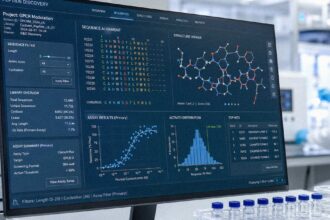
Artificial intelligence is becoming an increasingly important tool in peptide research. In July 2026, researchers at the University of Pennsylvania reported an AI-powered platform called PeptiVerse, designed to help scientists analyze peptide molecules and predict several of their chemical and biological properties.
Using AI to Study Peptide Properties
According to the researchers, PeptiVerse was trained using multiple datasets and designed to predict characteristics that can influence whether a peptide is worth further scientific investigation. The platform examines properties including solubility, cellular entry, potential toxicity, and persistence within biological systems.
The goal is not to replace laboratory experiments. Instead, computational predictions can help researchers prioritize molecules for additional investigation and reduce the amount of time spent evaluating less promising candidates.
Combining Data With Experimental Research
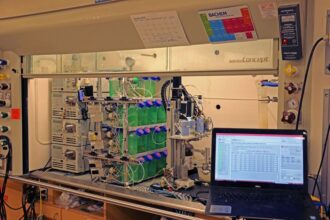
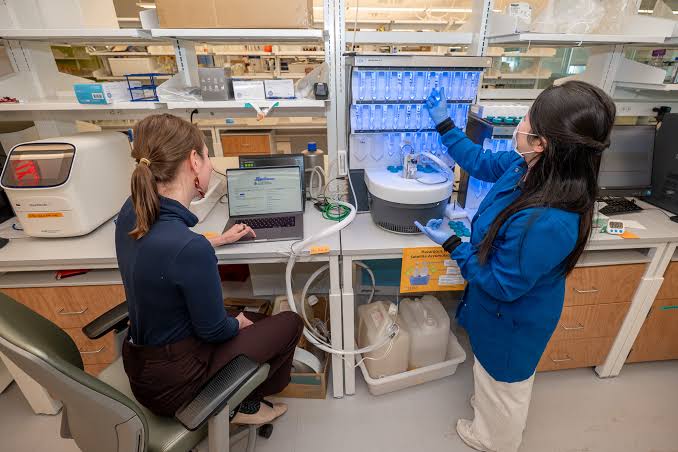
Modern peptide research increasingly combines computational analysis with laboratory methods. Researchers can use large datasets to identify patterns that may not be obvious from individual experiments, while experimental studies provide the evidence needed to test those predictions.
This approach is part of a broader trend toward data-driven peptide discovery. Nature’s peptide research coverage also highlights the growing role of computational design and generative AI in investigating new peptide molecules.
Why This Development Matters
Peptides can have complex chemical and biological characteristics, which can make their research challenging. Computational tools that can evaluate multiple properties simultaneously may help scientists organize research more efficiently.
The broader significance of platforms such as PeptiVerse is therefore the integration of artificial intelligence, peptide chemistry, biological data, and experimental validation into a single research workflow.
A Growing Research Field
The development comes during a period of rapidly expanding interest in peptide science. Researchers are studying new approaches to peptide synthesis, molecular characterization, sequencing, and computational design. Recent Nature coverage has highlighted developments ranging from water-based peptide synthesis to AI-assisted peptide optimization.
At the same time, it remains important to distinguish computational predictions from established scientific evidence. A prediction generated by an AI system does not by itself demonstrate that a peptide is safe, effective, or suitable for a particular medical application. Experimental and, where relevant, clinical research are necessary to establish those conclusions.
As AI technology continues to improve, researchers may increasingly use computational systems to explore the enormous number of possible peptide sequences and identify candidates worthy of deeper scientific investigation.
This article is for educational and scientific information only and is not medical advice.