Peptide science continues to attract significant attention in 2026, with researchers exploring new methods for discovering, identifying, and understanding peptide molecules. Recent developments span advanced sequencing technologies, computational research, peptide databases, and improved approaches to molecular characterization.
New Methods for Peptide Sequencing
One of the most notable areas of recent research is peptide sequencing. Scientists are investigating technologies that can identify peptide sequences at increasingly fine resolution.
Recent research published in Nature Communications described an exopeptidase-assisted nanopore approach capable of residue-by-residue peptide sequencing. The researchers combined stepwise molecular analysis with machine-learning methods to identify peptide sequences and investigate post-translational modifications.
These developments could provide researchers with additional tools for studying complex biological samples and understanding molecular differences between closely related peptides.
Growing Interest in Peptide Databases
Another recent development is the expansion of resources for peptide research. Researchers have introduced HORDB 2.0, a manually curated dataset containing thousands of peptide hormones and peptide hormone drugs, together with information such as sequences, structures, physicochemical properties, clinical data, patents, and literature references where available.
Large curated datasets can help scientists organize existing knowledge and support computational research into peptide structure and function.
Computational Research Continues to Grow
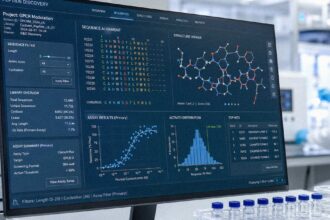
Artificial intelligence and computational modelling are becoming increasingly connected with peptide research. Researchers are using computational approaches to investigate molecular structures, analyze peptide sequences, and explore biological interactions.
At the same time, researchers emphasize that computational predictions still require appropriate experimental validation. A computer-generated prediction is not, by itself, evidence that a particular peptide has a specific biological or clinical effect.
Peptide Research and Scientific Evidence
The growing public interest in peptides has also increased discussion about the difference between scientific evidence and commercial claims. Recent reporting and scientific commentary have highlighted concerns that enthusiasm surrounding some peptide-related applications can move faster than the available clinical evidence.
For this reason, readers should distinguish between peer-reviewed research, clinical evidence, regulatory information, and promotional claims when evaluating information about peptides.
Looking Ahead
The peptide research landscape is becoming increasingly interdisciplinary. Advances in nanopore technology, machine learning, proteomics, molecular databases, and analytical chemistry are giving scientists new ways to investigate peptide molecules.
Recent research published in Nature journals demonstrates that peptide sequencing and sensing remain active areas of scientific development.
As these technologies mature, they may help researchers better understand peptide structure, molecular interactions, and biological functions.
This article is for educational and scientific information only and is not medical advice.